

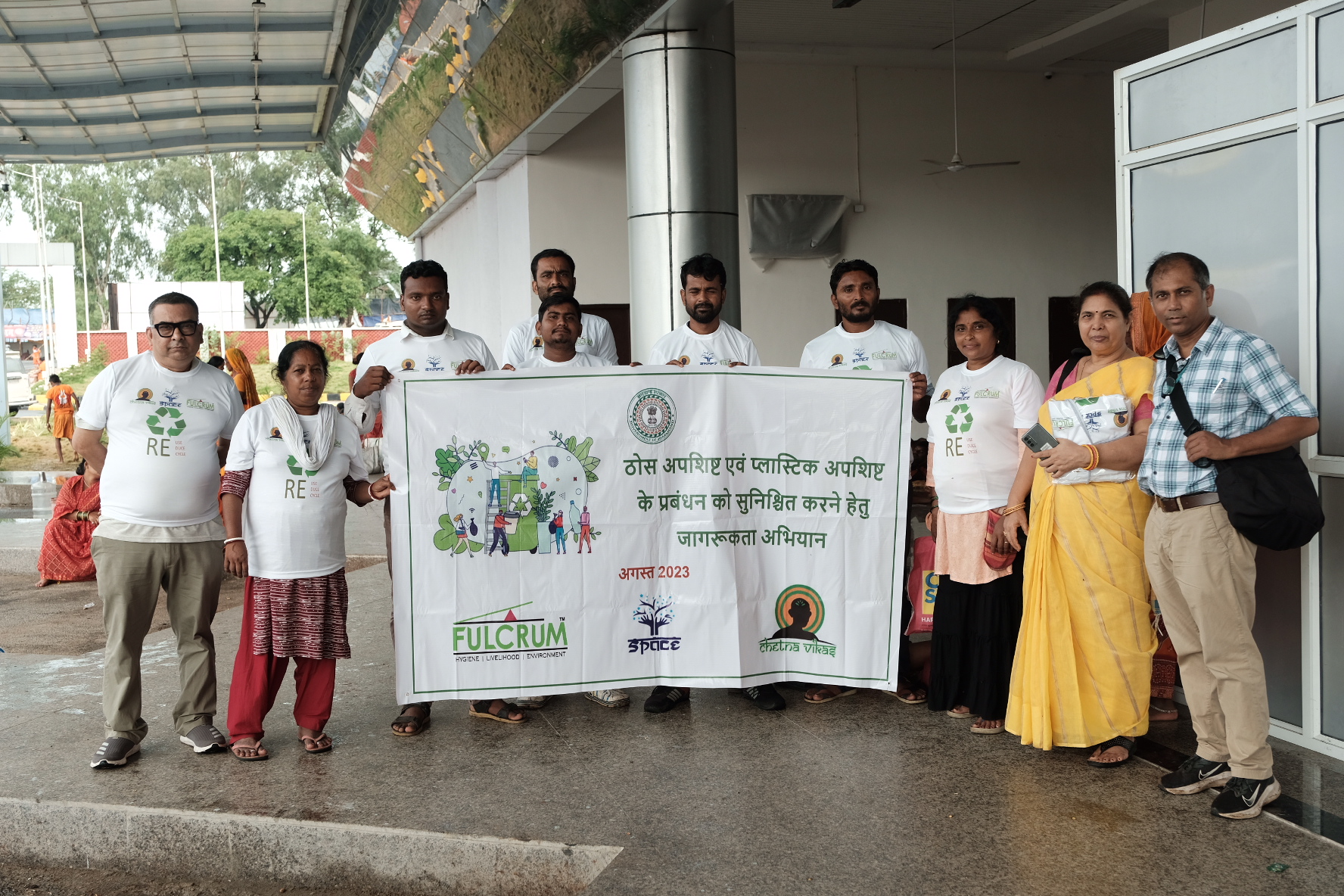
Waste Management Campaign During Shrawani Mela in Deoghar Promoting Cleanliness and Sustainable Pilgrimage in Deoghar District
Waste Management
The Shrawani Mela in Deoghar is one of the largest and most significant religious gatherings in Jharkhand. Every year, thousands of pilgrims visit the holy city to offer prayers at Baba Baidyanath Dham. While this sacred event fills the city with devotion and energy, it also creates a major challenge — managing the large volume of waste generated during the festival.
To address this issue, a two-month Waste Management Campaign in Deoghar was organized in collaboration with the District Administration, Deoghar Municipal Corporation and partner organizations SPACE and FULCRUM. The initiative aimed to promote environmental responsibility, improve sanitation and encourage sustainable waste management practices among pilgrims, vendors and local residents.
Through awareness sessions, distribution of IEC materials, vendor engagement and on-ground support, the campaign successfully encouraged cleaner practices and reached approximately 20,000 people, contributing to a more sustainable and hygienic festival environment in Deoghar.
Objectives of the Waste Management Initiative
The campaign focused on creating long-term awareness and encouraging responsible behaviour during the festival. The key objectives included:
• Promoting Waste Segregation and Recycling: Educating pilgrims, vendors and local communities about separating waste and disposing of it responsibly.
• Increasing Environmental Awareness: Spreading awareness about the environmental impact of littering and the importance of maintaining cleanliness during large religious gatherings.
• Providing Information and Resources: Distributing Information, Educationand Communication (IEC) materials to guide people on proper waste disposal practices.
• Training Volunteers and Campaign Teams: Conducting orientation sessions to equip team members with knowledge about sustainable waste management practices.
• Encouraging a Culture of Cleanliness in Deoghar: Inspiring pilgrims, residents and businesses to take responsibility for maintaining hygiene and protecting the environment.
Strategic Approach to Waste Management
The campaign followed a structured and community-focused approach to ensure maximum participation and long-lasting impact.
1. Partnership and Collaboration: The initiative was carried out in close collaboration with district authorities, municipal officials, and partner organizations to ensure effective planning, implementation, and monitoring of waste management activities.
2. Orientation and Training: Team members and volunteers received training on sustainable waste practices, community engagement, and awareness communication, enabling them to effectively guide pilgrims and local stakeholders.
3. Community and Pilgrim Engagement: Direct interaction with pilgrims, vendors, and residents played a key role in spreading awareness and encouraging behavioural change.
4. Structured Campaign Duration: The campaign ran for two months during the Shrawani Mela period, allowing continuous engagement, monitoring, and improvement of waste management practices.
5. Implementation of the Waste Management Campaign: To ensure effective waste management during the Mela, several targeted activities were implemented.
6. Distribution of IEC Materials: Specially designed pamphlets, posters and awareness materials were created to educate visitors about:
• Waste segregation
• Responsible disposal practices
• Environmental protection
These materials were distributed and displayed at high-traffic locations across Deoghar, ensuring maximum visibility.
7. Awareness Sessions and Workshops: Regular awareness sessions were conducted throughout the Mela, featuring:
• Interactive discussions
• Demonstrations on waste segregation
• Practical guidance on responsible waste handling
These sessions helped people understand how small actions can contribute to a cleaner environment.
8. Engagement with Vendors and Local Businesses: Vendors and local businesses play a major role in waste generation during festivals. Special sessions were organized to encourage them to:
• Reduce plastic usage
• Use biodegradable packaging materials
• Maintain cleanliness around stalls
• Dispose of waste responsibly
This approach ensured that businesses became active partners in maintaining hygiene during the Mela.
9. On-Ground Support and Monitoring: Dedicated teams and volunteers were deployed at key locations to:
• Guide pilgrims to proper waste disposal points
• Monitor waste segregation practices
• Assist visitors in maintaining cleanliness
This constant on-ground support helped ensure that waste management practices were followed throughout the event.
Impact of the Campaign
The Waste Management Campaign made a significant difference in promoting cleanliness and environmental awareness during the Shrawani Mela.
1. Increased Awareness and Participation: Approximately 20,000 pilgrims, vendors, and local residents were directly engaged and educated about sustainable waste management practices.
2. Reduction in Litter and Improved Waste Disposal: Regular cleaning drives conducted in collaboration with the district administration and municipal corporation resulted in noticeable improvements in sanitation.
Pilgrims were observed to be more mindful of waste disposal, frequently using designated bins and segregation points.
3. Behavioural Change Among Vendors: Many vendors began adopting eco-friendly practices, including:
• Reducing plastic usage
• Using biodegradable packaging
• Managing waste responsibly
These changes contribute to a more sustainable festival environment for future years.
4. Strengthened Collaboration for Future Initiatives: The campaign also strengthened partnerships between local authorities, organizations, and community members, creating a strong foundation for future environmental and sanitation initiatives in Deoghar.
5. Towards a Cleaner and Greener Shrawani Mela: The Waste Management Campaign demonstrated that collective action can significantly improve sanitation and environmental responsibility during large religious gatherings.
By bringing together government bodies, organizations, vendors, volunteers and pilgrims, the initiative successfully promoted a culture of cleanliness and sustainability in Deoghar.
This effort serves as a model for sustainable festival management, ensuring that the spiritual significance of the Shrawani Mela is preserved while protecting the environment for future generations.